
Pumpkin Measurement Activities for 2nd Grade

Measuring pumpkins is one of those hands-on activities that makes a measurement unit feel real. Students measure, record data, and then return the next day to reflect on what they found. These pumpkin measurement activities cover two days: a hands-on exploration day and a follow-up reflection day that pushes students to make generalizations about measurement tools and units.

I used these activities with my second graders during our measurement unit, and they worked better than I expected and were much less messy.
What You Need
- Pumpkins (ask parents to donate — promise to return them for carving)
- Tape measures and rulers
- Butcher paper to lay under the pumpkins
- Recording sheets (free download below)
- Optional: a tablet or device to photograph each group with their pumpkin
Groups of 2-3 work well. With 10 pumpkins, you can run the whole class at once.

Day 1 — Hands-On Pumpkin Measurement
Choosing the Right Measuring Tool
Before students start measuring, talk through which tool is best for each measurement. A ruler works for height. A tape measure works for circumference. This conversation directly addresses the math standard of selecting appropriate tools for different measurement tasks, and it’s much more concrete than showing students a picture and asking which tool they’d use.
Measuring Circumference and Height
Students measure the circumference and height of their pumpkin in both centimeters and inches and record the data on their recording sheets. Measuring in both units sets up the Day 2 reflection question: why are there more centimeters than inches for the same pumpkin?


Counting the Seeds
After measuring, students open their pumpkins and count the seeds. Setup note: I cut a rectangular hole in the side of each pumpkin before school rather than removing the stem. The rectangular piece fits snugly back into place, keeping the stem intact and making it easy to return the pumpkins to families for carving.

Watch for different counting strategies as groups work. Some students will count one-by-one. Others will make groups of 10. Note which groups use the make-10 strategy; it’s useful information for small-group math instruction.
One thing to know: pumpkins have a lot more seeds than you’d expect. If you plan to use the seed counts for addition practice, check the numbers first to make sure they’re at the right level for your students at that point in the year.

Laying butcher paper under the pumpkins keeps the mess manageable. Second graders are better at containing the “goop” than you might think.
Free Recording Sheet
Students use a recording sheet to capture their measurements and seed count during the activity.

Day 2 — Reflection and Generalization
My goal for Day 2 was to give students space to process what they had measured and to come to their own generalizations about measurement tools and units. Students can be told generalizations, but when they arrive at them through their own experience, the understanding lasts longer.
Setting Up the Reflection
I photographed each group with their pumpkin on Day 1 (with student names blurred). I printed each photo, taped it to the original recording sheet, and gave students a follow-up sheet with sentence frames to complete.
The sentence frames asked students to:
- Identify which tool they used and explain why they chose it
- Explain why their pumpkin had more centimeters than inches
Why Use Sentence Frames?
Many of my students are English learners or come from homes where academic language isn’t used frequently. Sentence frames take away the pressure of constructing academic sentences from scratch and let students focus on the math concept instead. You can read more about how I use sentence frames in math in this post.
The vocabulary piece turned out to be the bigger challenge, not the sentence structure. Students who understood the math concept often still couldn’t find the words to explain their thinking. That’s important information about where instruction needs to go next.
The Two Generalizations Students Should Reach
The goal of Day 2 is for students to arrive at two ideas on their own:
- Some tools are better suited to certain measurements than others, and they can explain why.
- The same length always has more centimeters than inches because centimeters are smaller units.
Some students did an excellent job explaining their thinking with the sentence frames. Others, especially regarding the centimeter/inch question, couldn’t yet articulate why the numbers differed. That tells me those students need more hands-on measurement experience before the generalization sticks.
You can read more about using math generalizations across different areas of math in this post.
Displaying Student Work
Tape the Day 2 reflection sheet to the Day 1 recording sheet so students and families can see the full progression of learning across both days. This creates a clear picture of what students explored and how their thinking developed.
Free Pumpkin Measurement Resources
The free download includes both recording sheets: the Day 1 measurement and seed count sheet and the Day 2 sentence frame reflection sheet.
More Fall Measurement Activities
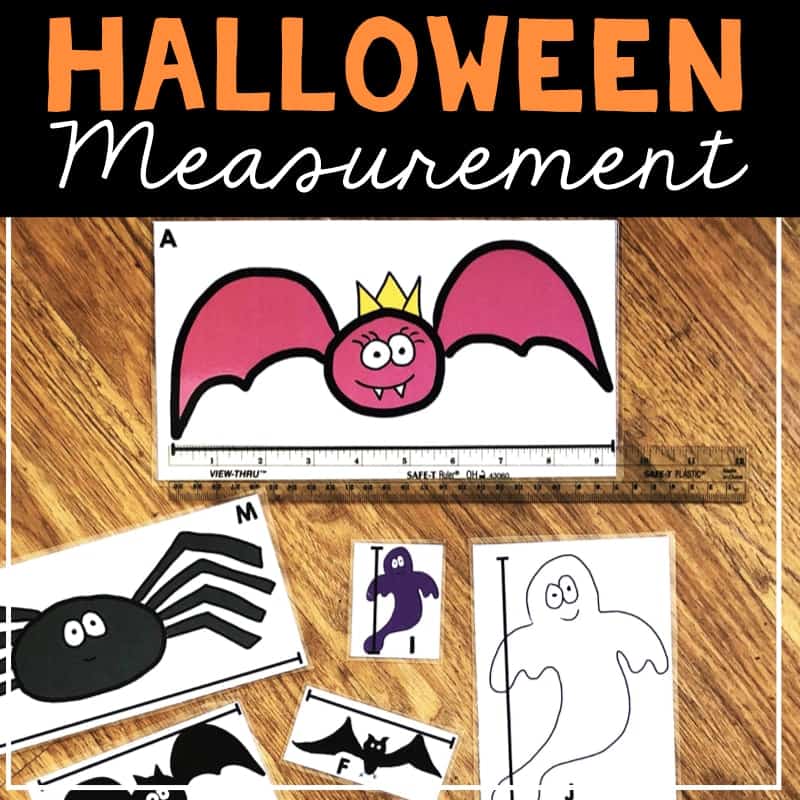
This activity pairs well with Measuring Bats, Spiders & Ghosts for a full fall measurement unit. After pumpkins, I moved into measuring feet and hands to keep building measurement skills with real objects students could relate to.
Looking for more ideas to teach writing alongside math? See how I use sentence stems to help students express their thinking across content areas.

I used your measurement of bats, ghosts, and spiders last year. They loved it and I can’t wait to do it again this year!
I ran off three copies of the set on oaktag and l laminated them and put each group in an envelope. Then I put the students in three groups. It was a great way to measure different items. We talked about inches and centimeters.
We are going to measure and weigh pumpkins first. I make the chart paper for them to count the seed. Then I bring a bag of pumpkin seeds for them to eat. Several of them have never tasted pumpkin seeds.
Thanks for your hard work!
Deb Blevins