
Informational Writing Week 2: Introducing the Topic in Second Grade
Writing an introduction is one of the hardest parts of informational writing for young students. Many students jump straight into facts without telling the reader what the paragraph will be about. During Week 2 of our informational writing unit, the focus shifts to helping students clearly introduce their topic.

This post is part of a series on informational writing. The overall structure of the unit is outlined in the overview post. Here, I’m sharing how we worked on introducing the topic during Week 2.
The Focus of Week 2
By Week 2, students are familiar with the routine for gathering information and working with facts. This allows writing instruction to focus on one specific skill: writing an effective opening sentence.
Rather than having all students use the same introduction, I begin giving students a limited choice in how they open their informational paragraphs.
Choosing a Topic for Practice
This week, students wrote about the spade-foot toad. I chose this animal because I had access to clear informational text that worked well for shared reading and discussion. The topic itself was less important than giving students a consistent context for practicing introductions.
Students gathered information from an article and a short video, using the same routines introduced in Week 1.
The routines for gathering information stayed the same as Week 1 so students could focus on writing.

Day 1: Gathering Facts
Day 1 followed the same structure as the previous week. As a class, we activated background knowledge, read the article, watched a video, and recorded facts together. Keeping the routine consistent helped students focus on learning a new writing skill rather than trying to figure out what to do next.

Day 2: Sorting Facts
On Day 2, students sorted facts into categories. The sentences were slightly more complex than those used in Week 1, but still written in a consistent format so all students could access the content.
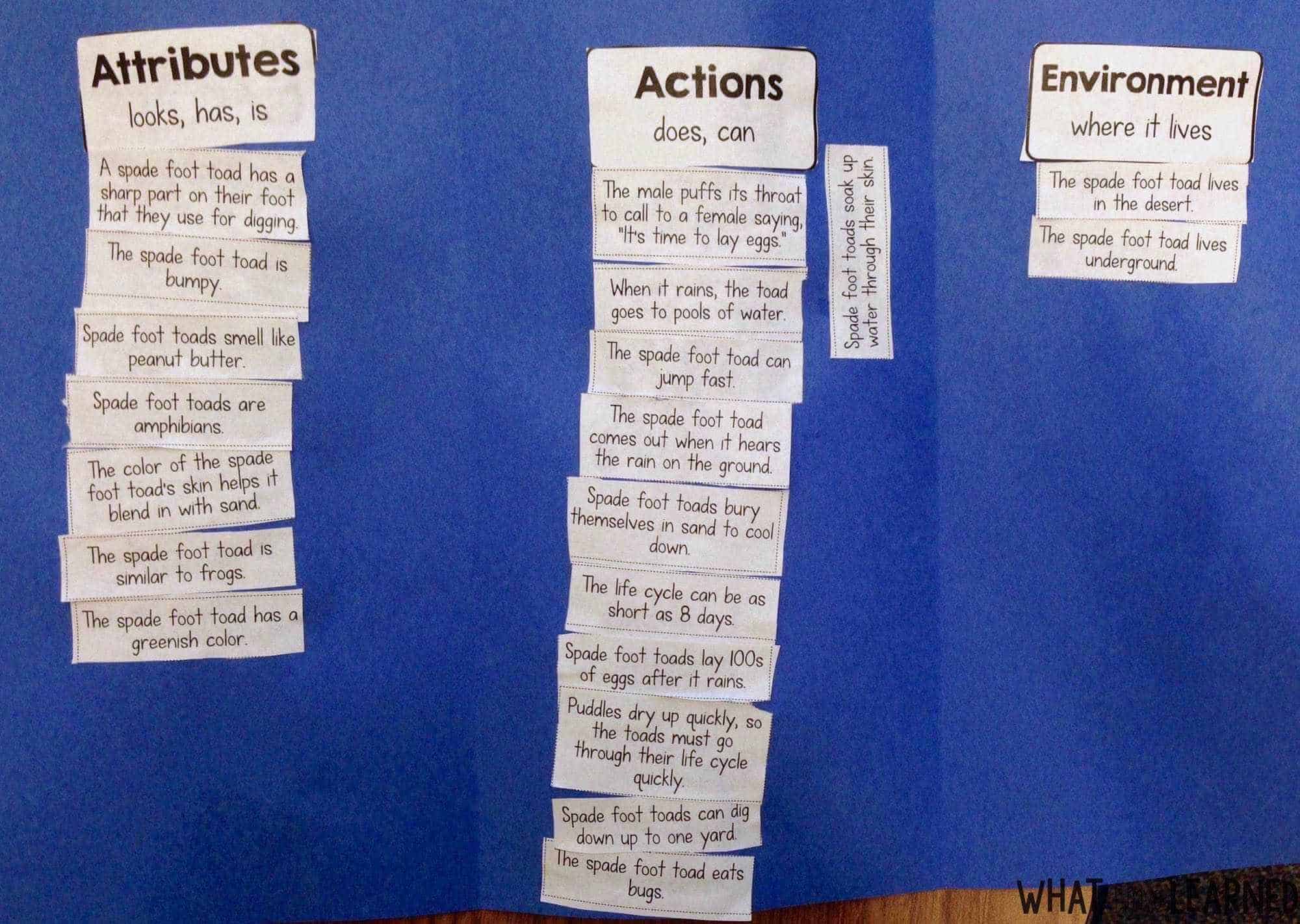
At this stage, my goal was not perfect sorting. I wanted students to think about how facts relate to each other and practice making decisions about organization. If students could explain their reasoning, the sort served its purpose.
Day 3: Practicing Topic Introductions
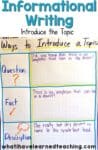
The mini-lesson for this week focused on three different ways to introduce a topic in informational writing. Together, we brainstormed examples and created an anchor chart showing each option.

When students began writing, they chose the type of introduction they wanted to use. This small amount of choice helped students take more ownership of their writing while still staying within a clear structure.
Days 3-5: Applying the Topic Sentence in Writing
After the mini-lesson on introductions, students applied their chosen opening as they wrote their informational paragraphs. As students wrote their paragraphs, I encouraged them to choose related facts rather than three unrelated details. Instead of selecting one fact from each category, students focused on one group of related information to support their topic sentence. This helped students see how a strong topic sentence connects to supporting details.
This is an area we continue to work on throughout the unit. Learning to group related facts and decide which details are most important takes time and repeated practice. Student samples from this week show progress, even though the writing is still developing.
For this week, I provided the concluding sentence. We return to conclusions later in the unit once students are more comfortable with introductions and organization.
Student Samples
Here are a few student samples. They’re still a bit choppy, but the students are coming along! At this stage, the writing is still developing, but students are beginning to apply the structure more intentionally.


Looking Ahead
Each week of the unit builds on the previous one. In Week 3, the focus shifts to finding and ordering related facts so students can develop stronger, more cohesive informational paragraphs.
- Informational Writing Overview – Unit structure and instructional routine
- Week 1: Building the Informational Writing Routine (Sea Turtles)
- Week 2: Introducing the Topic (Spade-Foot Toad)
- Week 3: Finding and Ordering Related Facts (Wolves)
- Week 4: Using a Checklist to Revise Writing (Ladybugs)
- Week 5: Organizing Facts Around a Concept (Bird Migration)
- Week 6: Applying the Full Informational Writing Process (Lionfish)
- Other tools: Genius Paragraph and Bats
Informational Writing Resources
The lessons shown in this series are organized in my Informational Writing Tools resource. It includes fact sorts, graphic organizers, checklists, and outlines that support each week of instruction.
If you’re looking for informational text to use with this routine, I also use Animal Articles. These include multiple text formats, QR codes, and fact sorts designed to support informational reading and writing.
In this resource, I provide the fact sorts, circle maps, links, and outline of how I taught these six weeks of informational writing lessons. Also included are checklists and a rubric to use with your students.

Informational Writing Tools for Elementary Animal Reports and Paragraph Writing
Support your elementary informational writing unit with ready-to-use informational writing tools, sentence sorts, graphic organizers, anchor charts, checklists, publishing pages, and report templates designed to help students plan, organize, and write informational paragraphs and animal reports.
Do you need engaging informational texts that your elementary students will actually want to read?
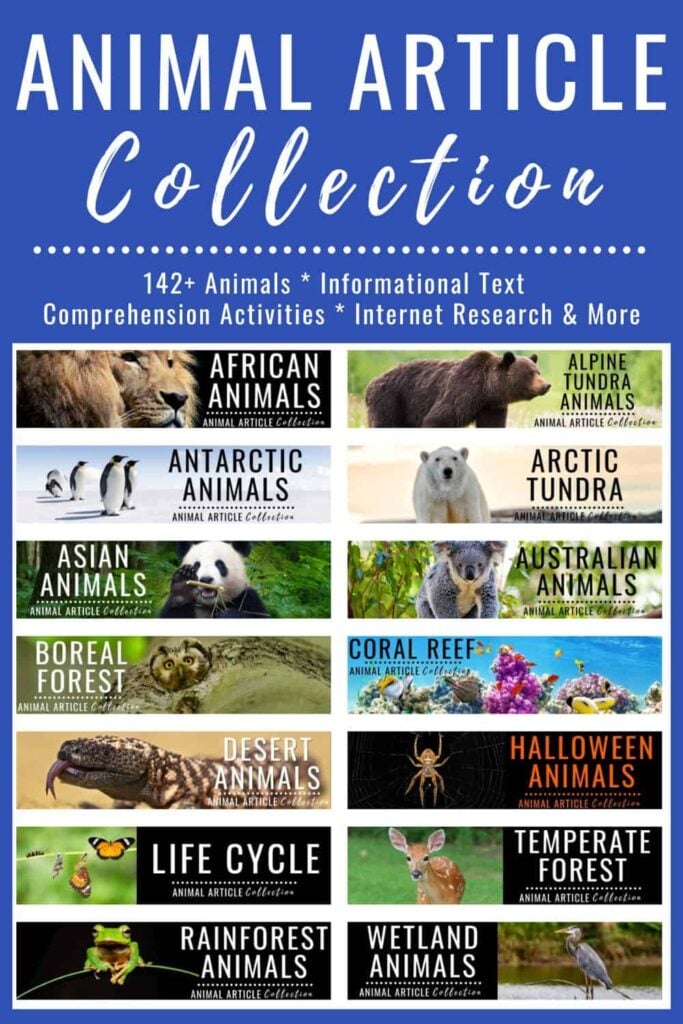
The Animal Article Collection includes 142+ animal articles spanning 14 ecosystems, complete with reading comprehension and structured writing activities. Students can choose their animal while building skills in informational text, research, and report writing.
Free Informational Writing Resource
If you’d like to try this approach in your classroom, you can start with a free informational article about frogs. It includes a two-page article with photographs, a text-only version, QR codes, and a fact sort.


On the circle map, can you explain the structure of it. I love this series. This is a lot like where we are currently in and your approaches with differentiation is fantastic. Love the idea of the sorts. Is your sort just a construction paper folded in a trifold with the categories?
This Informational Writing Overview might help with the structure of the circle map. Basically, I elicit what students know and put that on the topic, we research and add that to the bottom. While reading, we also verify the facts on top or cross them out of they’re incorrect.
Yes, it’s construction paper folded into thirds.
Oooh, your topic is spelled “amphibian”, not “amphian.”
Yes! I love it when we can show students that teachers are real people that make mistakes just like they do. I show my students that mistakes are okay and it becomes a teaching opportunity, both for spelling and character.
Yes! I love teaching students that everyone makes mistakes, including teachers. It’s such a great learning opportunity in both spelling and character.
Oh my gosh! I have taught 4th-6th ELAR and always struggle with breaking this down and scaffolding the skill of writing informational text. I can adjust and modify this easily for my 6th graders and I can’t wait to see the look on their faces at how easy writing can be for them now. Thanks so much for sharing this!
~Best regards
I have been wanting to introduce informational texts and writing for some time. This is a great breakdown of how to get it done. Thank you so much!