
Goals for Elementary Students: A List + Lesson Plan for K–5 Classrooms
Do your students struggle to set goals and action steps to accomplish them? This post outlines a lesson I taught my second-grade students to help them brainstorm and see the connection between goals and action steps. From brainstorming goals as a whole group to listing specific action steps, this lesson connects goals to actions and gives students a bank of ideas to get started on their own goal setting.

Do you ever have those light bulb moments when teaching and realize you NEED to do a lesson on a topic right now? It’s messy but necessary. It also becomes one of the best lessons you’ve ever done! That is what happened with this goal-setting lesson, which I’m calling goal-setting in the moment.
A List of Goals for Elementary Students
One of the hardest parts of goal setting is helping students decide what to set a goal for. Most students can tell you they want to “do better” or “be good,” but they struggle to name something specific.
This list gives students a starting point. It’s organized by category so you can focus on the area most relevant to your class or pull from multiple areas at once.
Behavior Goals for Students
- Listen when others are speaking
- Follow directions the first time
- Keep hands and feet to myself
- Use kind words with classmates
- Stay on task during independent work
- Raise my hand before speaking
- Stay in my seat during lessons
- Use a quiet voice in the classroom
- Clean up my space when I’m done
- Be a good sport during games and activities
Reading Goals for Students
- Read for 20 minutes every night
- Try to figure out unknown words before asking for help
- Retell what I read in my own words
- Read at least one new book each week
- Learn new vocabulary words from what I read
- Ask questions about what I’m reading
Math Goals for Students
- Practice my math facts for 5 minutes every day
- Check my work before turning it in
- Show my steps when I solve a problem
- Ask for help when I’m stuck instead of giving up
- Use math vocabulary when I explain my thinking
Writing Goals for Students
- Add more details to my writing
- Re-read my writing before turning it in
- Use different kinds of sentences
- Add a strong beginning and ending to my pieces
- Use transition words to connect my ideas
General School Goals for Students
- Turn in homework on time
- Ask a question when I’m confused
- Keep my desk and folder organized
- Use my time well during independent work
- Try my best before asking for help
- Participate in class discussions
When Goal Setting Lessons Don’t Go as Planned
I’m keeping it real with this post, people. You know when things just either come together really well or when they completely fall apart? This is kinda in between.
My student teacher was supposed to teach a lesson, but she got sick, so I pulled from my “resources” – think mental bank of sponge activities – and did some impromptu goal-setting.
Goal setting is not new to my students. We have been goal-setting since the beginning of the year, but I haven’t been very consistent. We’ll go in spurts for a few weeks, and then something else takes center stage and the goal-setting goes away for a while.
I also haven’t been doing a good job of giving students stickers for improvements on our Super Improver Wall. I have a hard time noticing the small improvements. I really need to do more of that; it’s just so hard to be consistent! I calculated that to move up 10 colors, students would need to change colors once a month, which means that I’m giving 3-4 stickers per student per week. That’s a lot! Way more than I’m doing.
Anyway, this lesson started with both the need to fill some time and wanting to reestablish goal setting in our classroom.
As a side note, would you like some goal-setting forms we use in the classroom? Sign up below to have them delivered to your inbox.

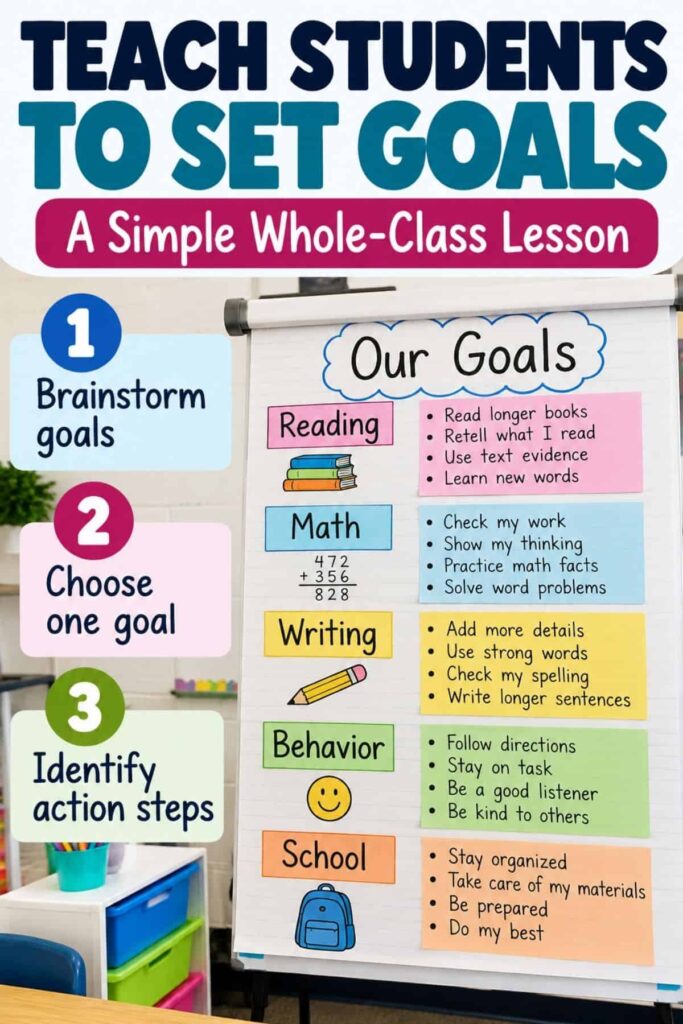
Brainstorm Goals as a Whole Group
We started with a group brainstorm of goals that we can set. It was easy to come up with behavior goals (the purple ones and a few others). If I had planned this ahead of time, I might have used a two-column chart to sort behavior and academic goals.

When I prompted students to brainstorm academic goals, they got stuck. The first four in blue are their first attempt at coming up with academic goals. You can see how general they are.
This is a great start for second graders, but I don’t want them to stop there! We talked a bit about being specific and adding some more details to our goals.
If this hadn’t been so spontaneous, I might have focused on one content area and its behavior and academic goals.
List Specific Actions to Accomplish Each Goal
I then had students choose a goal. I listed each student’s goal, making sure it was specific enough and appropriate. Some students chose the same goal, so the list was shorter. Listing the goals also gave students who couldn’t come up with a goal a good list to choose from.
After listing the goals, we went back and, as a class, gave each person suggestions on how they could meet their goal. It was powerful to hear the whole class give suggestions to one student on how he/she could meet the goal. I love the camaraderie and teamwork it established.
At the beginning of the year, I gave students a list of behavior goals and asked them to choose one to work on over the week. I realized that I need to do the same with academic goals.
I need to give students a list of potential goals. I also need to give them lists of possible actions that they can do to meet their goals. I also need to write these lists for each content area.
My Reflections on this Goal Setting Lesson
It was a spontaneous lesson on goal setting, but in the moment, I realized two things:
- I needed to connect my students’ goals with concrete actions
- I need to give them lots of ideas and then provide them with choices
The first bullet point above is VERY important. Students can tell me what they want to do, but they struggle to identify what they need to do to get there. What actions do they need to start doing to accomplish their goals?
This is a great opportunity to brainstorm and create class lists of common goals and the actions that get you there. The upward arrow is a fantastic tool to use for this process.
The upward arrow also fits in with the second bullet point above. Students need the information before they can work with it. Giving students MANY ideas for both goals and action steps helps them plan how to move forward.
Do you want to help me generate a list? What kinds of goals would you like your students to set? And what actions can they take to meet their goal? Comment below, and I’ll compile a list for us to use!
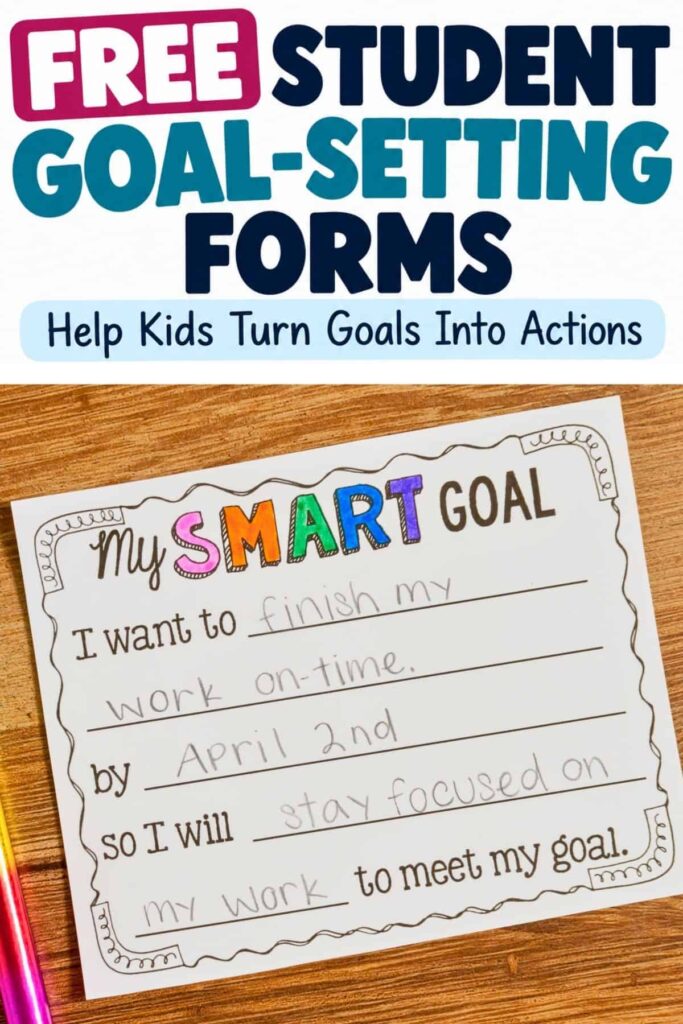
Would you like some FREE goal-setting forms?

Thank you for these ideas. 🙂