
What is the Extension Phase of the 5E Instructional Model
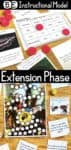
During the Extension phase of the 5E instructional model, students apply what they learned in earlier phases to new situations. After developing an understanding of the scientific concept during the Explain phase, students now use that knowledge in different contexts.
The goal of the 5E Extend phase is to deepen understanding by giving students opportunities to transfer their knowledge to new investigations, real-world problems, and increasingly challenging tasks.

In this article, you’ll learn what happens during the Extension phase and see examples of activities and questions teachers can use to help students extend their learning.
5E Instructional Model Recap
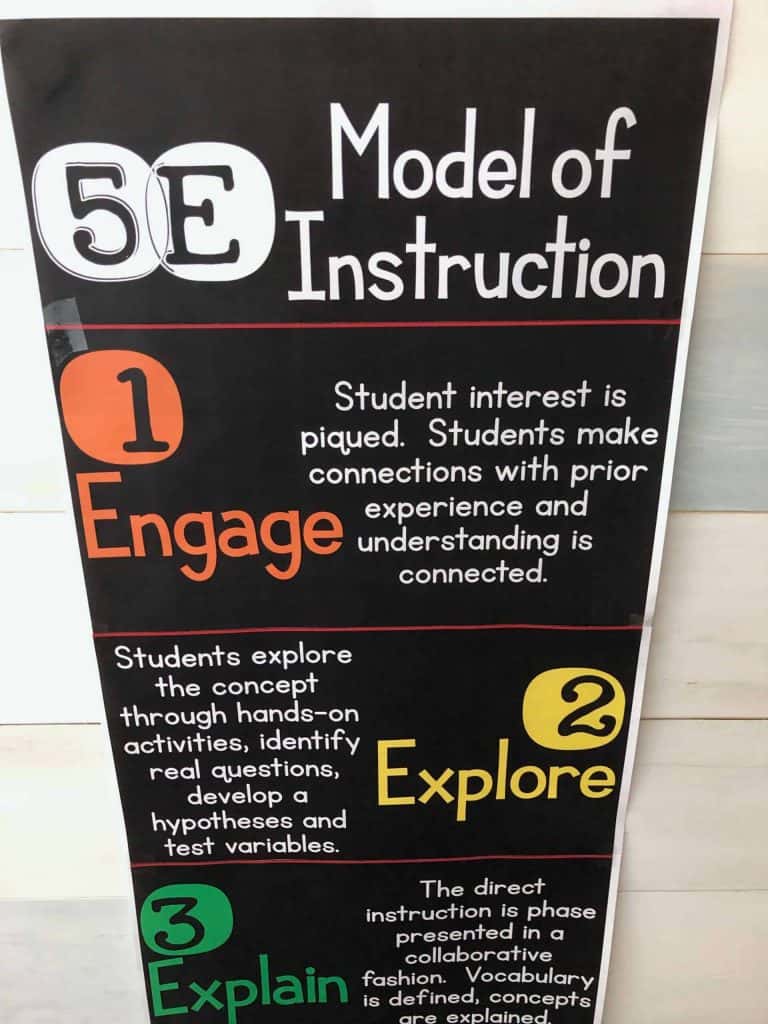
The 5E instructional model is a framework for inquiry-based science instruction. Students build understanding through five phases of learning:
This article focuses on the Extension phase, where students apply the scientific concepts and vocabulary they learned during the Explain phase.
If you are new to the model, you may want to begin with these articles:
What Happens During the 5E Extension Phase
Students Apply What They Have Learned
By the time students reach the Extension phase, they have already explored the concept and learned the scientific explanations behind it.
Students now apply this knowledge to new experiences and investigations. They begin using the vocabulary and concepts from the Explain phase to interpret new situations.
This process helps students move beyond memorizing information and begin thinking like scientists.
Students Transfer Knowledge to New Situations
Traditional instruction often moves directly from teaching a concept to testing it.
The Extension phase takes learning a step further. Students apply their understanding to new situations that require them to think critically and make connections.
Through these experiences, students learn to generalize scientific principles and recognize how the concept applies in different contexts.
Learning Activities Become More Challenging
Activities during the Extension phase often increase in complexity. Students may design new investigations, analyze unfamiliar data, or apply the concept to real-world situations.
These experiences reinforce the scientific ideas introduced during the Explain phase and help students develop a deeper understanding of the topic.
Types of Activities for the 5E Extension Phase
Teachers can use many different activities to help students extend their learning. The following examples encourage students to apply scientific concepts and vocabulary in new situations.
Classify objects or situations
Students classify objects or situations based on the scientific concepts they have learned.
For example, students might group objects according to observable properties or categorize events based on scientific principles. As they classify the items, students explain their reasoning using appropriate vocabulary.
Conduct a descriptive investigation
Students may conduct a descriptive investigation. The teacher gives the students a research question. Groups of students come up with procedures for and carry out the investigation. In drawing a conclusion, students use their new knowledge of scientific concepts and vocabulary.
Conduct a comparative investigation
Students may conduct a comparative investigation. The teacher gives the student groups two objects or situations to observe and collect data. The students analyze the data and formulate a conclusion using the scientific concepts and vocabulary in this topic.
Conduct an experimental investigation
Students may conduct an experimental investigation. The teacher gives groups of students a situation they will test. In designing an experiment, students identify variables and only test one variable at a time. The groups analyze their data. They draw conclusions using the concepts and vocabulary from the current topic.
Revisit previous Investigations
Students may take their investigation from the Explore phase to the “next step.” After analyzing their data through the lens of this topic’s scientific concepts (which was probably done in the Explain phase), they ask the next question. Considering x, ask question y. They then conduct the investigation, analyze data, and draw conclusions using their newly acquired scientific knowledge and vocabulary.
Solve Real -World Problems
The teacher gives students a real-world problem to solve. If there is a current event or real-world problem within the topic, the teacher can lead students to an article or website explaining the problem. Students can design a solution or investigation into that topic. Using what they have learned in the Explain phase, students apply this knowledge to explaining the problem and finding a solution.
Questions Teachers Ask During the Extension Phase
Questioning continues to guide student thinking during the Extension phase.
Teachers often ask open-ended questions that encourage students to apply their knowledge in new contexts.
Examples include:
- What do you already know about _____________ ? How do you think this can be applied to _____________?
- What would happen if ________________________ ?
- Why do you think that ___________________ ? What evidence do you have of this? Can you think what else might have caused it to happen?
- What are the similarities between _________________ and _________________? Why do you think this is?
- What are the differences between _________________ and _________________? Why do you think this is?
- How can you explain _________________ ? Do you think that there might be another explanation for it?
- Where can we use this concept in real life?
These questions help students connect scientific ideas to new experiences and deepen their understanding.
Why the Extension Phase Matters
The Extension phase helps learning “stick.”
When students apply their knowledge to new situations, the concepts become more firmly anchored in their thinking. Students begin to see how scientific ideas work in many different contexts.
This phase is sometimes skipped when time is limited, but it plays an important role in helping students develop a deeper understanding.
Through Extension activities, students gain confidence in their ability to use scientific concepts independently. They begin to see themselves as capable problem solvers and investigators.
By the end of this phase, students are ready to demonstrate their understanding during the Evaluation phase.
Example of a 5E Extend Lesson
Here is an example of a 5E Extend lesson that encompasses the skills above:
Imagine students have learned about erosion during the Explain phase.
During the Extension phase, students analyze photographs of different landscapes and identify evidence of erosion.
Students explain how wind, water, or ice may have shaped the landforms. They apply the scientific concepts and vocabulary they learned earlier to explain what they observe.
5E Instructional Model Series
This article is part of a series about the 5E instructional model for teaching science.
Here are links to the other articles in this series:
- Part 1: Why I Love the 5E Model of Science Instruction
- Part 2: Why Use the 5Es?
- Part 3: What are the 5Es?
- Part 4: Engage Lessons
- Part 5: Explore Lessons
- Part 6: Explain Lessons
- Part 7: Extend Lessons
- Part 8: Evaluate Lessons
- Part 9: Our 5E Science Lessons
5E Lesson Plans
We have created NGSS-aligned 5E Unit Plans for third and fourth grades. In these lessons, students are led through each NGSS Performance Expectation using the 5E Model of Instruction.
3rd Grade 5E Units
Here are our 5E units for third grade.
-

-
-
-
-
-
-
-
-
-
-
-
-
-
-
-
-
Product on sale5E Unit Plans for Third Grade BUNDLEOriginal price was: $148.10.$95.00Current price is: $95.00.






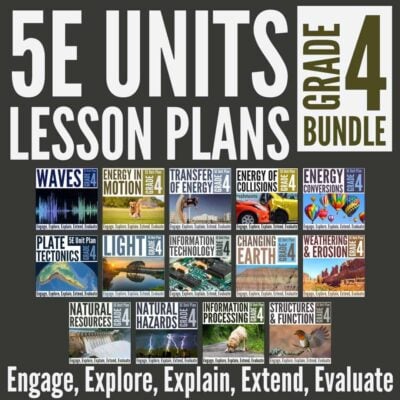
4th Grade 5E Units
Here are the 4th grade 5E Units:
-
-
-
-
-
-
-
-
-
-
Product on sale4th Grade 5E NGSS Science Unit Plan BUNDLEOriginal price was: $138.60.$99.00Current price is: $99.00.
-
-
-
-
-



Free 5E Instructional Model Posters
Looking for a simple way to help students understand the 5E learning cycle? These free classroom posters highlight the five phases of the model
Jessica BOschen
Jessica is a teacher, homeschool parent, and entrepreneur. She shares her passion for teaching and education on What I Have Learned. Jessica has 16 years of experience teaching elementary school and currently homeschools her two middle and high school boys. She enjoys scaffolding learning for students, focusing on helping our most challenging learners achieve success in all academic areas.