
Data Wall Ideas for Elementary: 6 Strategies and Examples
Do you use data walls in your classroom to help your students meet classroom and individual goals? Does your district require you to set goals with your students?
If you are looking for data wall ideas for elementary classrooms, this post covers six strategies for using them in a way that motivates students without putting anyone on the spot.
Data walls can be a great resource for motivating students if they are used correctly. And there is definitely a right way to use data walls in elementary classrooms.

I recently read two blog posts about data walls that got me thinking about how I help students monitor their progress and see academic and behavioral improvements.
As you probably know, I do a lot of work around goal setting, specifically setting SMART goals and helping students monitor their progress. This is good stuff, people. Goal setting helps students see their progress and focus on their learning. As a teacher, it helps me see where a student needs assistance and where I can focus my attention.
Let me make this very clear: NEVER SHAME A CHILD. Even when using goal setting, NEVER make a child feel like they aren’t measuring up. That is not the purpose of goal setting.
If you want to see how I extend this into a visual students can check independently, Goal Setting in the Elementary Classroom walks through how I use anchor charts alongside data walls to build that independence.

6 Ways to Use Data Walls Effectively
If you use a data wall in your classroom, here are a few recommendations that get to the heart of goal setting with elementary students.
Set whole group SMART Goals
When using a data wall in the elementary classroom, set whole group goals, not individual goals. The individuals all contribute to the whole class goal, which makes accomplishing the goal a team effort.
Here are a few tips for how to set whole group goals:
- DO NOT put student names or numbers on rubrics.
- Don’t identify which students are at which level.
First, students probably already know where they are; if they don’t, that should be done during individual conferencing. Two, identifying who is losing creates an unhealthy learning environment. You NEVER want to tell a student in front of the class that she is not making it. This doesn’t motivate them to do better.
Use amounts of students, not specific students
When creating a whole group goal, create the goal as a set number of students.
For instance, I created a chart for kindergarteners to use when setting a goal with letter sounds that included three levels.
We focused on the number of students who knew a certain number of sounds, those who were close, and those who had far to go. We set a SMART goal of X number of students knowing their sounds, a sum of those who already knew their sounds, and those who were close.

Here are a few examples from my 1/2 combo class. In the first example, my groups of students were working toward reaching a certain benchmark. At the time, our district was still measuring reading rate.
Everyone worked toward the goal, but we counted our success based on the “we did it” and “almost there” groups. We all celebrated when those two groups met the goal (which they did every time because the groups were specific enough to the students who could do it).
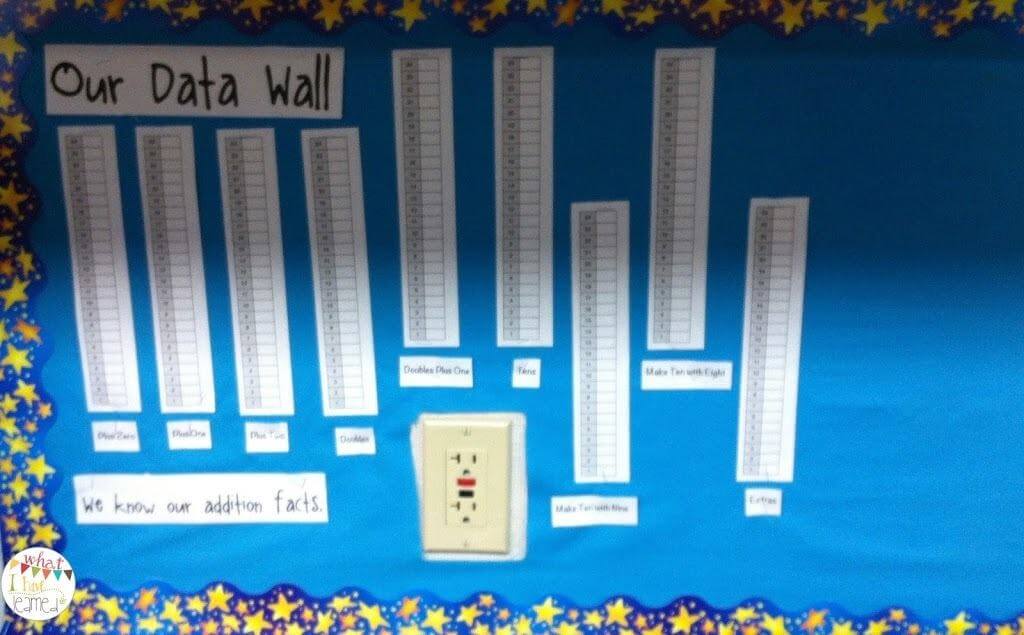
This is a very blurry photo (sorry!), but each strip has the numbers 1-24 on it, which is the number of students in my classroom and the addition strategy underneath it. As students mastered a specific addition strategy, I colored in one more student space on the strip. No names and no numbers are attached to it, but it shows us working toward ALL students reaching the goal of learning that strategy.
Use a Rubric
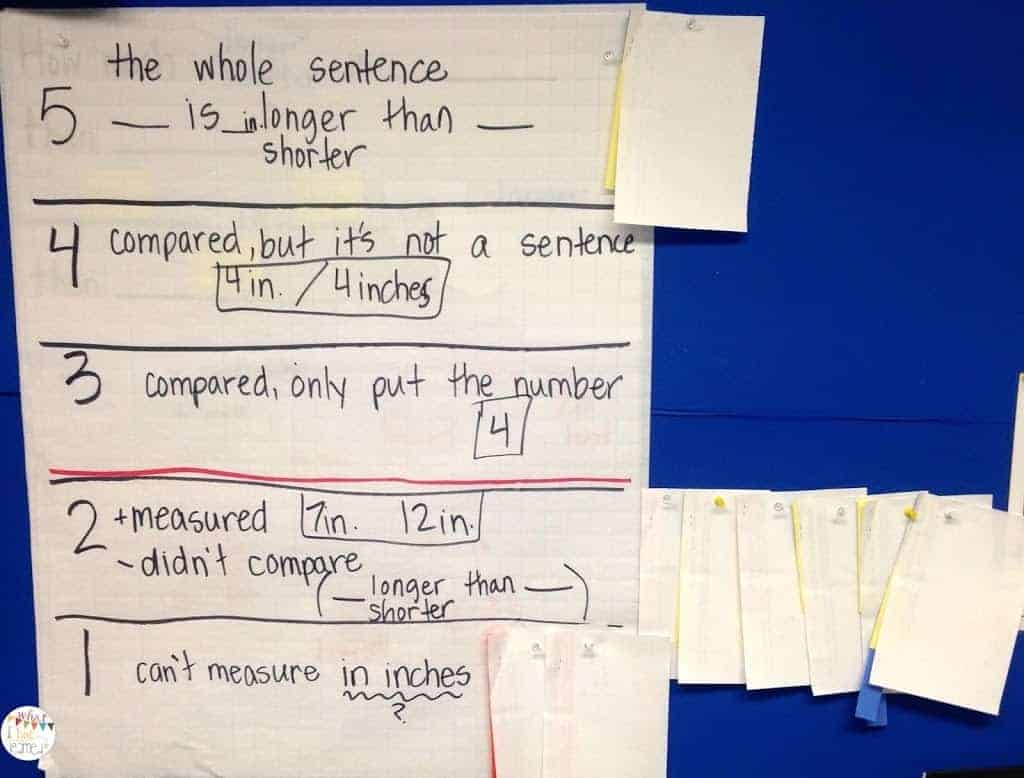
Here is an example of a rubric I quickly created with students. I created the rubric with students based on our grade level’s rubric. This rubric was for students to compare two measurements using academic language. The papers on the right are student papers, and they’re how we counted the number of students at each level.
This was a pre-assessment, so we could see what we needed to do to improve. Again, it displays a level of anonymity. I didn’t leave these up on the wall, by the way. It was a lesson about rubrics and what we needed to learn.
Fudge your numbers if you only have 1-2 students in the lowest rubric area. Again, you don’t want to single students out. It’s okay to tell students where they should be at a point in the year, but don’t single out those who aren’t there yet. Most of the time, students know if they aren’t making the grade. Putting it on a wall is not new information.
Create a Super Improvers Wall
A Super Improver’s Wall is an effective way to showcase student improvements.. It is wholly focused on improvements. Each student is working on their own goal and making improvements to become a better student.
This is a little harder to monitor, but this way, all students are moving forward at the same rate because all students have goals that are within their ZPD. Nothing is too hard for a student, and they’re all making improvements and becoming better learners. You can read more about a Super Improver’s Wall in this blog post.
Focus the class goals on non-academic goals
Behavior, organization, participation, or something else that doesn’t exclude students based on their academic ability makes strong goals. Almost anything can be a goal as long as it is specific and measurable.
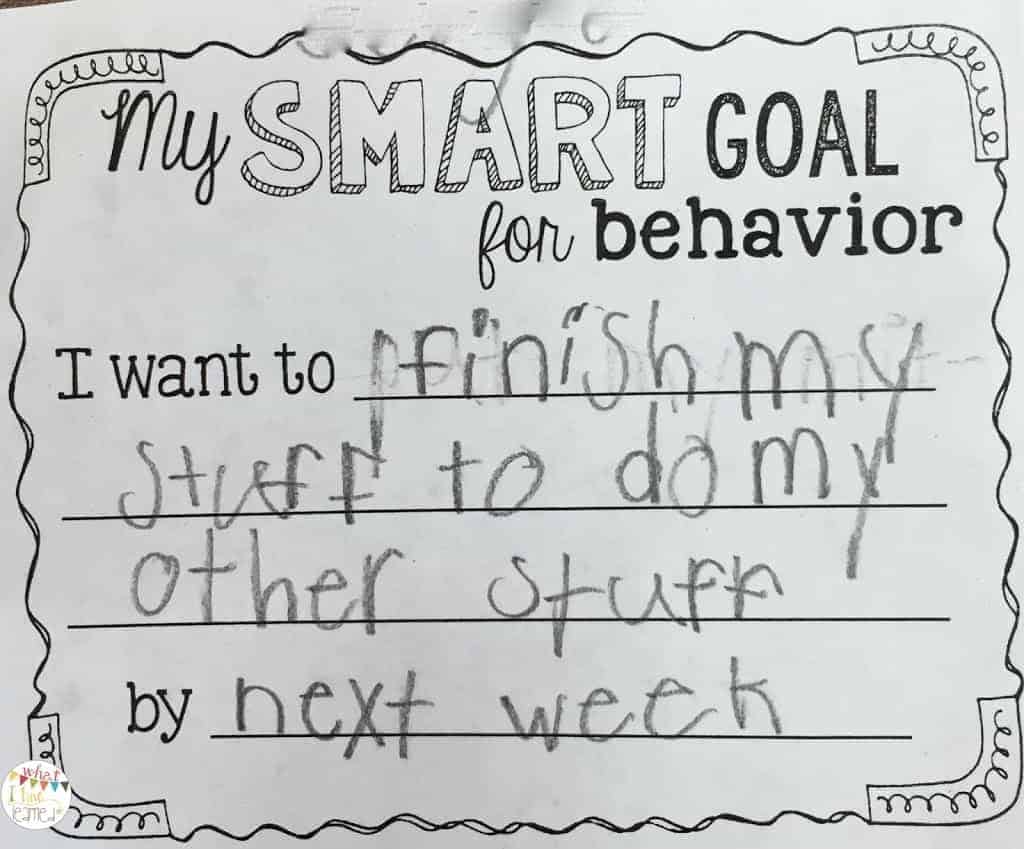

Here are a few SMART goals my students set for behavior. Although these are individual goals, they emphasize the ability to set non-academic goals. This is especially helpful for those kiddos who have a hard time learning and making progress academically.
Each month, our school has a different character trait theme, like responsibility, citizenship, fairness, etc.. We will often use that trait as a whole class goal, brainstorming things we can do that illustrate that trait.

Don’t make it a competition or a race
Set up the wall so that all students are winners. There is no one ahead of the other. Competitions have a lasting negative effect on how students see themselves, either positive or negative. The goal is not to tie students’ self-worth to external factors. The aim is to help them develop a positive self-worth and a sense of community within the classroom.
Here’s another example from my 1/2 combo and those students reading at a first-grade reading level.
This chart was after our January assessment cycle. I showed students where they had been in September, where the same student was in January and the goal for June. Notice that not all students had the same goal. Depending on where they started, some were to get to G and some to L. I also showed students how many levels they had improved in the months they had been in school (the June goal was based on a similar amount of improvement).

Determine if the goal is too high
If a child is not reaching his goals, think about the goals being set. They’re probably too high for the student. Reset the goals to something more appropriate and within the student’s zone of proximal development, or ZPD.
A good rule of thumb is a 10% increase, whatever that looks like for the skill you’re working on. Depending on their needs and your standards, you’ll need to adjust that for some students. Be continually adjusting the goals to meet the needs of your students.
Encourage collaboration and teamwork
Make it a class goal for ALL students to meet the goal. Even if one or two can’t, fudge the data and reward everyone for trying their best. Have those who can, help those who can’t, and give the lower students credit for the collaborative effort. Whatever you do, encourage teamwork and an idea that you’re all in this together. It’s not me against you to win a prize. Show students that everyone needs to succeed.
Are you required to have a data wall in your classroom? How do you do it? Do you help your students set goals? I’d love to hear about how it goes in your classroom.

Instead if a data wall, I use a data binder. Each student has a binder. They record any pieces of data we are collecting and we discuss any personal goals they should set. My students absolutely love their binders and often want to pull them out to record their results and set new goals when they meet the current goal.
We have used data binders, too! I use them for individual data where students keep track of their individual goals. We do set some class goals, though, which are on our data wall. I love goal setting! Isn’t it fun to see students accomplish their goals?
I use a data wall and student data binders. Both are wonderful tools at Parent/Teacher conferences, data meetings, and SAT meetings.
I tend to use the data binders, too. Their personal goals we keep in a binder and review semi-quarterly and at conference time. Another way I like to use the bulletin board for goals is to integrate an art related activity with goals or wishes. I usually read a picture book about either helping others, or reaching a dream. Then the kids make a colorful (hot air) balloon. Beneath it and attached is a basket. On, or in the basket is their goal to make the world a better place.
I love the idea of incorporating art into the bulletin board / data wall. It makes it much more colorful and meaningful for students. Awesome idea!
Love this article! Not sure how I stumbled across this beauty but I’m thankful I did! As a 2nd year teacher one of my goals this year is to use data to help with my students growth. This article gave me a great starting point and how to achieve my desired results in a positive manner for my students. Thanks 🙂
My school uses data walls. I like your ideas for my kindergarteners. I hope to incorporate them this year. The Smart Goals would help me and my students focus on one skill at a time, instead of being overwhelmed by all the skills that need to be mastered. Side note: I have an outlet in my bulletin board also!
Hi there, I love this post! I’m in my second year teaching fifth grade and working on setting smart goals with my kiddos. Any advice for creating a standards based data wall and smart goals?
Most of the advice in the blog post is what I’d give here: Make it generic and whole group focused, not student specific. Use the SMART Goals method for setting the goals, specific, measurable, action plan, realistic, and having time limit. Here are a few other blog posts that might help: Student Goal Setting in Elementary School and Goal Setting in the Moment.
Great ideas! I put data in a binder and display it on my whiteboard. I love the bulletin board idea.
This is great! Our school is pushing goal setting, but I couldn’t figure out how to do it without “calling kids out.” Use the data, but mix it up so it’s not in order and don’t label it!
I did one thing which I thought was good… for our Math Fluency Goals I found hand-shaped post-its (Walmart) and labeled them with the fluency set. Each finger up was 20 percent of our class so they could see which goals we were still working on or had mastered as a class.
Thanks for the info! I am bookmarking for ideas on data.
I love that you “fudge the data” at times so that every child can be rearward for their hard work or effort.