
14 Valentine’s Day Science Experiments

If February in your classroom feels like a mix of sugar highs and paper heart confetti, you’re not alone. Valentine’s Day can quickly turn into a craft-a-thon. Why not channel all that excitement into something hands-on and standards-based instead?
These Valentine’s Day science experiments and activities give you meaningful ways to teach physical science, life science, earth science, and STEM skills—without losing the fun of the holiday. From fizzy chemical reactions to heart-themed engineering challenges, these Valentine’s Day science experiments are easy to adapt for primary and upper elementary students.

Below you’ll find a collection of experiments organized by science domain, so you can plug them right into your February plans.
Valentine’s Day Science Experiments
These Valentine science experiments are grouped by physical science, earth science, life science, and STEM. That way, you can meet your standards and still celebrate the season.
Physical Science Valentine’s Day Activities
These Valentine’s Day experiments for kids focus on properties of matter, chemical reactions, density, static electricity, and more.
1. Valentine’s Oil and Water
Fill a clear jar with water, add oil, and drop in red or pink food coloring. Add small plastic hearts for a festive twist. Students observe how oil and water separate and discuss density.
Science focus:
- Density
- Properties of liquids
- Observing and recording results
Extension idea: Have students predict what will happen before shaking the jar.
2. Magic Color-Changing Liquid
Teach your students about acids and bases while making magic potions.

3. Secret Valentine’s Day Messages
Write messages with lemon juice on white paper. After the paper dries, gently heat it to reveal the hidden writing.
Science focus:
- Chemical reactions
- Heat and change
- Irreversible changes
Students love the “spy” aspect, and you can tie it directly to cause-and-effect writing.
4. Flying Cupids
Cut small paper hearts from tissue paper and use balloons to demonstrate static electricity. Rub the balloon on a sweater and bring it close to the heart.
Science focus:
- Static electricity
- Attraction and repulsion
- Energy transfer
Students can test which materials create the strongest static charge.
If you need more ways to teach students about static electricity, check out this blog post.

5. Valentine’s Day Slime
Mix glue, baking soda, and contact solution to create slime. Add red glitter or heart confetti.
Science focus:
- States of matter
- Viscosity
- Effects of temperature
Have students compare warm vs. cold slime and describe the differences.
6. Fizzy Hearts
Place baking soda in a tray, add candy hearts, and drip vinegar over them.
Science focus:
- Chemical reactions
- Gas production
- Observing changes
Students can describe what they see, hear, and feel.
7. Dissolving Candy Hearts
Test how quickly candy hearts dissolve in different liquids such as water, vinegar, or soda.
Science focus:
- Solubility
- Fair testing
- Variables
Students can measure time and create simple bar graphs of their results.
8. Raining Hearts Viscosity Experiment
Layer liquids of different densities in clear containers. Drop in small plastic hearts.
Science focus:
- Density
- Viscosity
- Comparing liquids
This one is visually engaging and sparks great discussion.
Earth Science Valentine’s Science Activities
Looking for Valentine’s Day science activities that connect to earth and environmental science?
10. Grow Crystal Hearts
Shape pipe cleaners into hearts and grow borax crystals on them.
Science focus:
- Crystallization
- Solutions
- Changes over time
Students can compare crystal size based on time or solution concentration.
Life Science Valentine Science Experiments
9. Colorful Carnations
Need an experiment to go with your study of flowers and plants? Look no further than this activity. It’s a great way to start conversations on the importance of each flower part.

If you want to go even further into plant parts, our Third Grade Plant and Animal Science Stations have students dissect and label the parts of a flower.
11. Make-A-Stethoscope
Using a funnel, tubing, and tape, students can build a simple listening device to hear heartbeats.
Science focus:
- Structure and function
- Circulatory system
- Observation skills
Students can measure their resting heart rate and compare it after light activity.
This fun and interactive activity will pair or group your students and listen to their heartbeats. It’s a great way to introduce your students to how the human heart works.
Our Fourth Grade Structure & Function Science Stations have students label the parts of the heart.

Valentine’s Day STEM and STEAM Activities
These Valentine’s science activities blend engineering, math, and creativity.
12. Kirigami Heart Bookmarks
What a great craft to make with your students this Valentine’s Day. These origami hearts make perfect bookmarks to give away or keep.
These heart-shaped bookmarks connect geometry and symmetry to art.
Skills practiced:
- Spatial reasoning
- Fine motor skills
- Design thinking
13. Marshmallow Heart and Toothpick Structures
Challenge students to build the tallest or strongest heart-shaped structure.
Science focus:
- Engineering design process
- Stability
- Testing and redesign
Students can reflect on what worked and what failed.
14. Heart Catapults
Design a small catapult to launch candy or marshmallow hearts.
Science focus:
- Force and motion
- Angles
- Measurement
Students can measure distance and analyze which design worked best.

Use These Valentine’s Day Experiments to Teach the Scientific Method
All of these Valentine’s Day science experiments pair perfectly with structured recording sheets.
Have students:
- Ask a question
- Form a hypothesis
- Identify variables
- Record observations
- Draw conclusions
Even your youngest scientists can begin using simple lab sheets with sentence starters and diagrams.
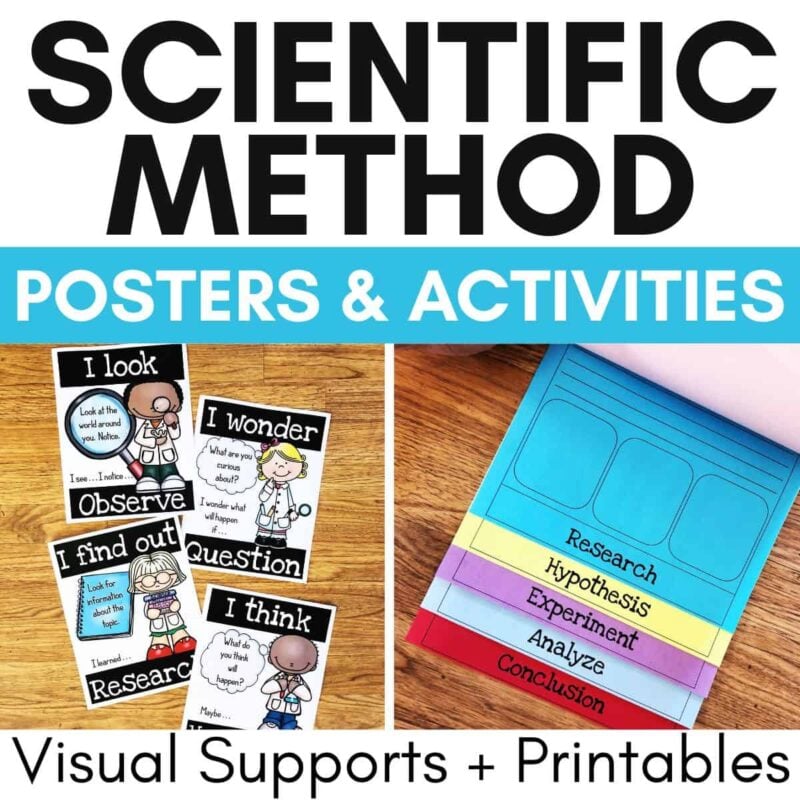
Scientific Method Posters & Recording Sheets for Science Experiments
Teach the scientific method with this set of posters, science experiment recording sheets, and a science experiment flip book.
More Valentine’s Day Classroom Ideas
If you’re planning an entire Valentine’s theme week, consider pairing your Valentine’s Day science experiments with writing prompts, math challenges, or reflective craftivities. A heart-themed bulletin board filled with science reflections makes a great hallway display.
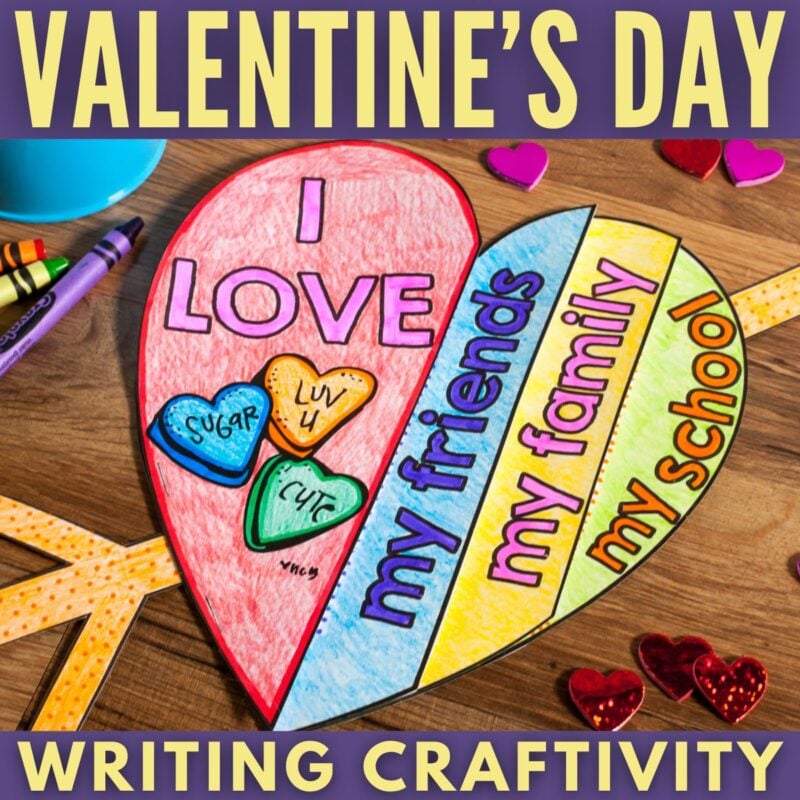
Valentine’s Day Flap Book Craft for February
This heart-shaped Valentine’s Day Flap Book helps students reflect on and describe what makes the people they care about special.
Seasonal Science All Year Long
If you enjoy seasonal science, consider building a routine around it. Students love connecting real-world holidays to science concepts.
Here are a few blog posts all about seasonal science experiments:
- Halloween Science Experiments
- Thanksgiving Science Experiments
- December Holiday Science Experiments
- Valentine’s Day Science Experiments
- Earth Day Science Activities
- Easter Science Activities
Seasonal hooks keep engagement high without sacrificing rigor.
Bringing Valentine’s Science experiments into your classroom doesn’t require complicated materials or hours of prep. With a few simple supplies and clear expectations, you can turn February into a month of meaningful scientific discovery. And if there are a few extra candy hearts involved, no one is complaining.
Jessica BOschen
Jessica is a teacher, homeschool parent, and entrepreneur. She shares her passion for teaching and education on What I Have Learned. Jessica has 16 years of experience teaching elementary school and currently homeschools her two middle and high school boys. She enjoys scaffolding learning for students, focusing on helping our most challenging learners achieve success in all academic areas.