
Books About Magnets for Kids: 10 Picks for Elementary School
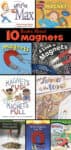
Magnetism can be tricky to teach because students cannot see the force. They can only observe what it does. Picture books help bridge that gap. This list of magnet books for kids covers attraction, repulsion, poles, compasses, and electromagnets through a mix of nonfiction and read-aloud fiction that works well for kindergarten through 3rd grade.

This post contains links to affiliate websites, such as Amazon, and we receive an affiliate commission for any purchases made by you using these links. We appreciate your support!
These books fit naturally into the 3rd grade physical science unit on electric and magnetic interactions. For hands-on activities and station ideas, see my physical science guide for elementary students.
The 10 books below are a mix of types:
- Nonfiction concept books (7): What Makes a Magnet?, Magnets: Pulling Together Pushing Apart, What Magnets Can Do, Magnets Push Magnets Pull, A Look at Magnets, All Aboard Science Reader: Magnets, Magnetic and Nonmagnetic
- Fiction read-alouds (2): The Shivers in the Fridge, Magnet Max
- Comics-style nonfiction (1): The Magic School Bus — Amazing Magnetism
All are appropriate for kindergarten through 3rd grade, with grade ranges noted below for each entry.
Magnetism Picture Books
What Makes a Magnet? ~ Franklyn Branley
Grade: PreK – 3
What makes a magnet a magnet? Why does it pick up a paper clip but not a feather?
A clear introduction to how magnets work, with step-by-step experiments woven throughout. The teaching points are accessible for PreK-3, and the at-home experiment instructions make it easy to extend the lesson.
Bonus: Step-by-step instructions for students to make their own magnets.


Magnets: Pulling Together, Pushing Apart ~ Natalie Rosinsky
Grade: K – 4
Have you stopped to think what is a magnet? Are there different kinds? Why do they do what they do?
Students learn about different types of magnets, Earth’s magnetic poles, motors, and compasses, and how they affect our lives. Through experiments that highlight the concepts of attraction and repulsion, students will understand how magnets work.
Bonus: Six investigational experiments included for real hands-on learning.

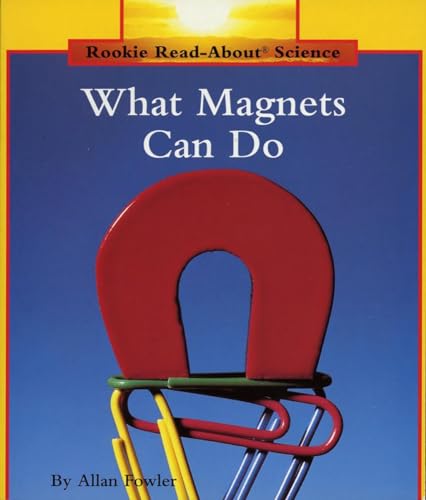
What Magnets Can Do ~ Alan Fowler
Grade: 1 – 2
Looking for a simple book that explores the vast array of magnets in the world?
With easy to understand explanations and bold photos depicting magnets and magnetic properties, students will discover how magnets work. They will learn about many daily items that involve magnets, from compasses to electromagnets, stereos to telephones, and everything in between.
Bonus: Includes a photo-rich glossary!
Magnets Push, Magnets Pull ~ David A. Adler
Grade: K – 3
Do you know what the world’s largest magnet is?
Of course you do, but do your students? With these easy-to-read text and lively illustrations, they will now! In fact, they will learn a lot about magnets: How they work, basic concepts of attraction and repulsion, and even how to make their own magnet!
Bonus: The glossary included will build quite the magnetic vocabulary.

The Magic School Bus – Amazing Magnetism
Grade: K-3
The Frizz and her class challenge Mr. O’Neatly’s class to a science contest on magnetism. Pretty straightforward, right? If you know anything about Magic School Bus, you know this is anything but!
An in-depth look at magnetism — covering domains, poles, magnetite, and videotape — that keeps students engaged through humor and story. An in-depth look at magnetism to include domains, poles, magnetite, and videotape! Yes, you might have to explain what videotape is, but it is a great way to learn how magnets help us record things. There is not a magnetic concept left unexplored.
Bonus: Magic School Bus books include experiments to try and sidebars packed with additional detail.

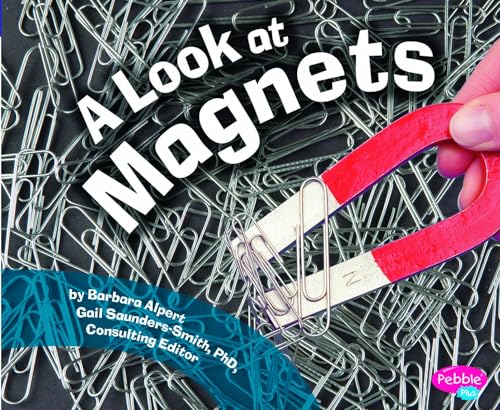
A Look at Magnets ~ Barbara Alpert
Grade: K-2
We all have magnets stuck to our fridge, but do we know why they stick?
With its clear explanations and bold photographs, this is a solid lesson companion for students who are beginning to explore magnetism.
Bonus: Glossary included, plus an online resource for more magnetic fun!
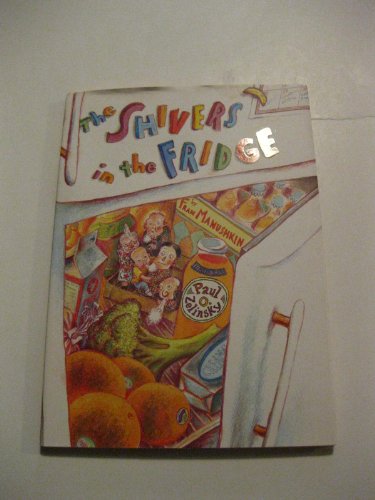
The Shivers in the Fridge ~ Fran Manushkin
Grade: PreK – 3
Let’s face it, most magnets lead a pretty dull life. Not the Shivers. Their cold, dark lives are punctuated by earthquakes, bright lights, and monsters. Monsters that snatch family members away, until only one remains. Can he survive?
A hilarious, beautifully illustrated, adventurous read-aloud that will engage students and make them ask for more. The illustrations add a level of mystery to the story and students will work overtime figuring out just how the Shivers arrived in their frigid home in the first place.
Not strong on the concepts of magnetism, but a must-have addition to any lesson plan for the sheer joy it brings.
All Aboard Science Reader: Magnets ~ Anne Schreiber
Grade: 2-4
Is it magic? Or is it magnetism?
Through a journey that begins over 2,000 years ago in Turkey, students learn who discovered magnetism and the many different types of magnets in use today. Written for advanced readers, but engaging enough for some younger readers, too. The experiments included will help students fully understand the concepts presented in the book.
Bonus: Glossary included to help with the harder words.

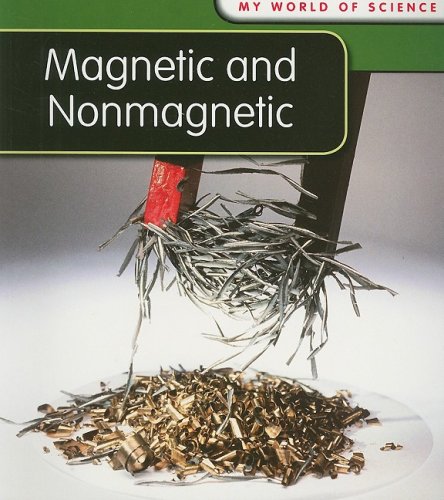
Magnetic and Nonmagnetic ~ Angela Royston
Grade: 1-2
What makes an object magnetic? Does water stop magnetism? Do we use magnets every day?
These questions, and many more are answered through engaging facts and photos. Students learn the difference between magnetic and nonmagnetic materials and how magnets are used in the world around us.
Bonus: Students can perform the illustrated experiments on their own or in the classroom for better understanding.
Magnet Max ~ Monica Lozano Hughes
Grades: 1-3
Magnet Max loves his magnets, but his friend Nick thinks it’s all magic!
Students explore alongside Max and Nick as they discover how magnets work. A rhyming read-aloud that introduces magnetism through character and story. The illustrations support comprehension and make it a strong choice for PreK-2 read-aloud time.

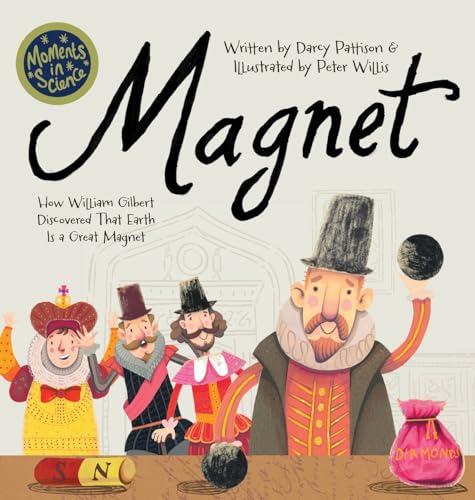
Magnet: How William Gilbert Discovered That Earth Is a Great Magnet ~ Darcy Pattison Grade: 1 – 5
Why does a compass needle always point north?
William Gilbert spent years collecting lodestones from around the world and running experiments to answer that question — debunking myths along the way and eventually concluding that Earth itself is a magnet. This 2024 picture book follows Gilbert through the scientific method step by step, making it one of the few books on this list that connects magnetism to the history of science and scientific thinking. It reads at a higher level than most books on this list, which makes it a strong choice for 3rd, 4th, or 5th grade read-alouds or independent reading.
Bonus: The back matter includes additional biographical detail about William Gilbert for students who want to go deeper.
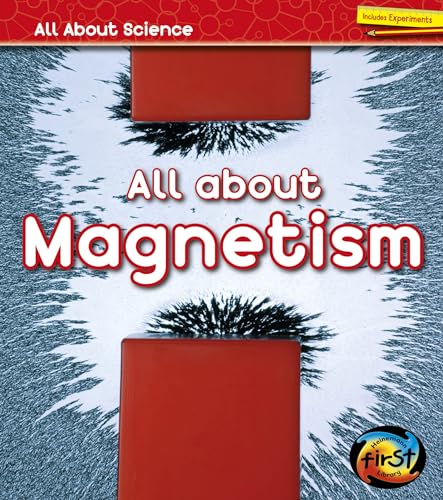
All About Magnetism ~ Angela Royston Grade: K – 2
What is magnetism? What makes some materials magnetic and others not? And where do magnets show up in the world around us?
Part of the Heinemann First Library All About Science series, this book covers magnetic materials, everyday uses of magnets, compasses, and Maglev trains—making it one of the few books on this list that connects magnetism to modern transportation technology. The text is short and clear for early readers, with photographs throughout. School Library Journal notes that each concept is reinforced by hands-on experiments.
Bonus: Three experiments included that students can try independently or in the classroom.
A list of all 10 Books About Magnets in One Place
- Magnet Max ~ Monica Lozano Hughes
- Magnetic and Nonmagnetic ~ Angela Royston
- All Aboard Science Reader: Magnets ~ Anne Schreiber
- The Shivers in the Fridge ~ Fran Manushkin
- A Look at Magnets ~ Barbara Alpert
- The Magic School Bus – Amazing Magnetism
- Magnets Push, Magnets Pull ~ David A. Adler
- What Magnets Can Do ~ Alan Fowler
- Magnets: Pulling Together, Pushing Apart ~ Natalie Rosinsky
- What Makes a Magnet? ~ Franklyn Branley
- Magnet: How William Gilbert Discovered That Earth Is a Great Magnet ~ Darcy Pattison
- All About Magnetism ~ Angela Royston
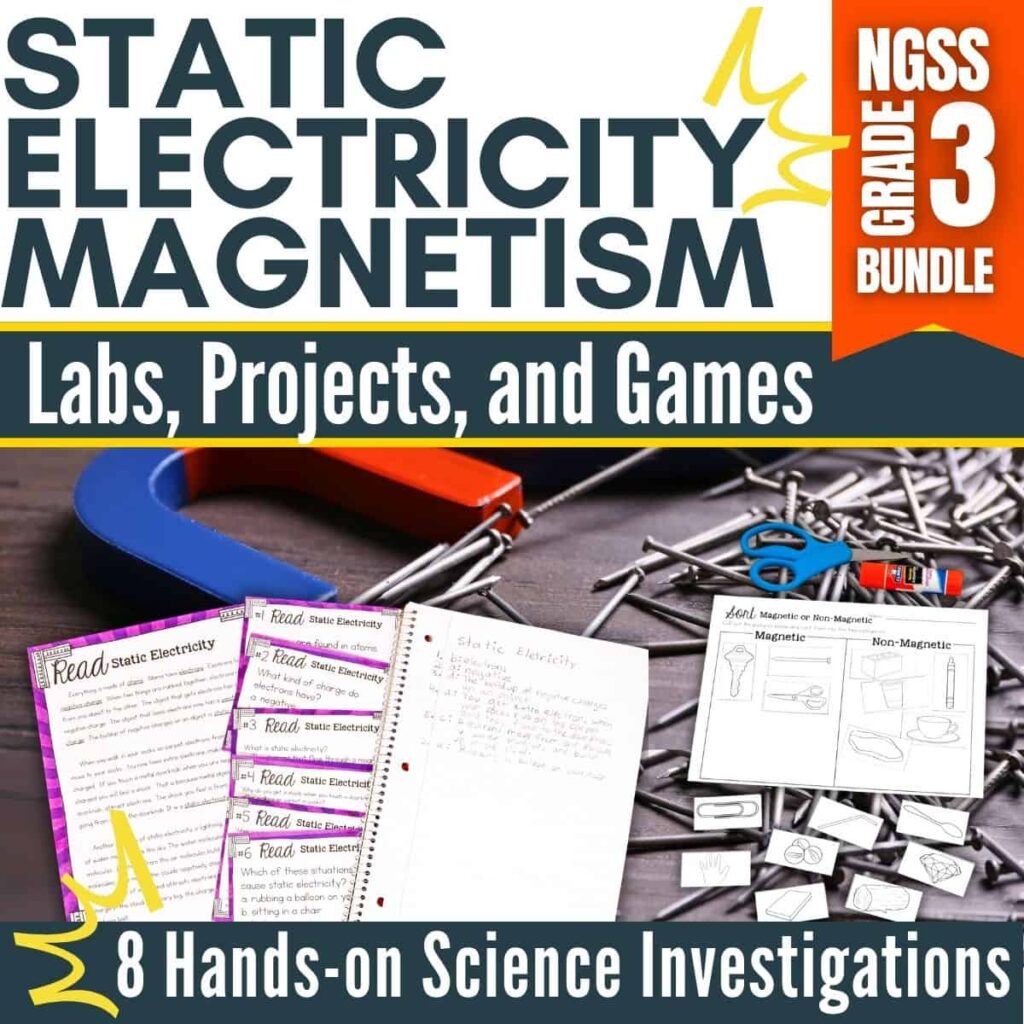
Static Electricity and Magnetism Third Grade Science Stations
The focus is on NGSS 3-PS2.B and includes concepts such as static electricity, magnets, and positive and negative charges.
More information about Teaching Magnets to Elementary Students
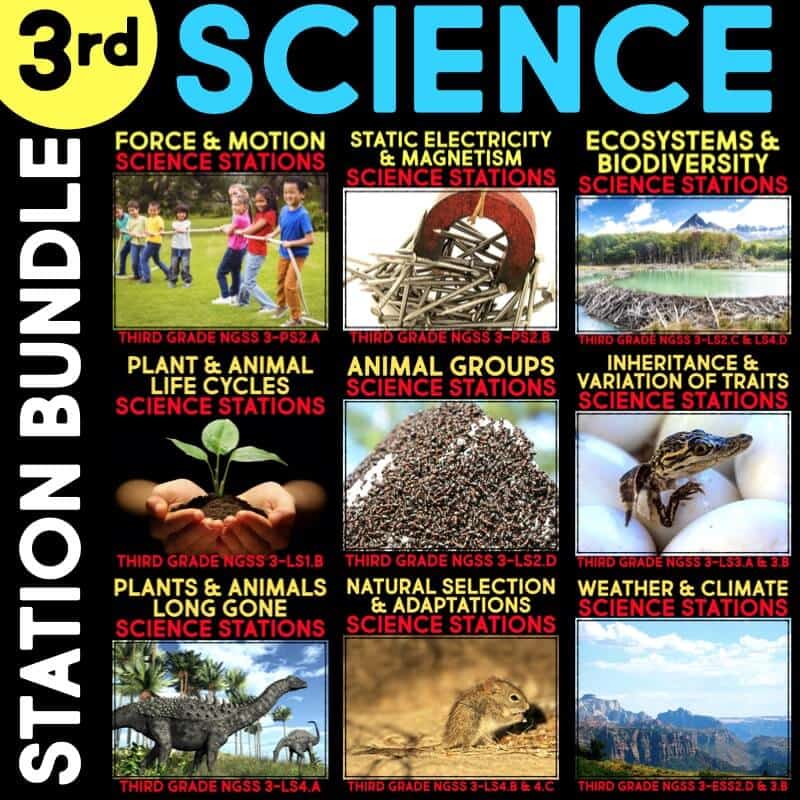
In addition to these books about magnets, the Third Grade Science Stations and 5E Lesson Plans on Static Electricity and Magnetism take the guesswork out of planning what to teach in science. The Static Electricity and Magnetic Set of Stations focuses on NGSS 3-PS2.B and includes the same concepts found in the book list, such as static electricity, magnets, and positive and negative charges.
Also available is a new 5E Unit Plan about Magnetic Forces and a Design Challenge. This unit focuses on investigating magnetism by learning about the relationship of magnetic interactions between two objects. Throughout the unit, students identify, test, and use the cause-and-effect relationship of magnetic forces to explain how magnets work.
You can see more in-depth information about the Third Grade Science Stations in this blog post. More information about the 5E Science Stations, along with examples from the Balanced and Unbalanced Forces Unit, is also available.
3rd Grade Science Units
-
Third Grade Science Stations BUNDLE
Original price was: $222.12.$111.84Current price is: $111.84. -

Static Electricity 5E Unit Plan for Third Grade
$9.90 -
Static Electricity and Magnetism Third Grade Science Stations
$13.78 -

Balanced and Unbalanced Forces 5E Unit for Force and Motion Third Grade
$9.90

Jessica BOschen
Jessica is a teacher, homeschool parent, and entrepreneur. She shares her passion for teaching and education on What I Have Learned. Jessica has 16 years of experience teaching elementary school and currently homeschools her two middle and high school boys. She enjoys scaffolding learning for students, focusing on helping our most challenging learners achieve success in all academic areas.