
Classroom routines and procedures examples are the foundation of a well-managed elementary classroom. When students know exactly how to enter in the morning, what to do when they finish early, and how to transition between activities, you spend less time redirecting behavior and more time teaching. The procedures below are the ones that make the biggest difference — and the ones I spend the most time establishing during the first two weeks of school.
Establishing important classroom routines and procedures makes the daily tasks automatic so you can focus on teaching. So, how do you establish good daily routines that every student can follow?
Whether you are a first-year teacher or a seasoned educator, it’s important to explicitly teach students how you want them to interact in your classroom. If you spend time teaching these daily routines at the beginning of the school year, you will save time and energy as you work with students throughout the year.
What are Good Classroom Procedures?
Classroom procedures are the routines and actions you and your students follow hourly, daily, or weekly. Explicitly outlining the must-teach classroom procedures will help you communicate expectations with students and make your first week and year run smoothly!
What is the difference between Classroom Procedures and Classroom Rules?
You likely have classroom rules for students. Both rules and procedures make for excellent classroom management.
What is the difference between rules and procedures in the classroom?
- Classroom rules tell what students can or cannot do.
- Procedures show how students are to do something and communicate their expectations about the rules.
How do you Figure Out Your own Routines and Procedures in the Classroom?
The best way to figure out what procedures and routines you need is to brainstorm and list them. Set a timer for 10 minutes. Sit down with a blank piece of paper and a pencil.
Go through a typical day in your classroom and list all the things students do. Broaden it to a week. List things that students do 1-2 times a week.
After ten minutes, take a break, walk, or do something else. Return to your list after a break and record anything else you might have thought.
Sit down for a few minutes and list what bothers you about your classroom routines.
Do students get up to use the pencil sharpener at inappropriate times or raise their hand when you’re teaching a lesson to ask a question not related to the topic? What little things do you find annoying about your current routines?
There’s a list below to get you started!
When Should You Teach and Review Classroom Routines & Procedures?
Establish effective classroom procedures and routines at the beginning of the school year. Model them all. Model the wrong way to do them.
Then, model the right way to do them. Practice them repeatedly during the first two weeks of the school year. Practice. Practice. Practice.
Praise the students who complete the procedures accurately. You will do much of this teaching during the first week of school.
As the back-to-school season wanes, you will spend less and less time on teaching these procedures because students will have internalized the systems you have put in place. You can now turn your attention to teaching content vs. processes.
However, you will need to review classroom procedures throughout the year. When might you need to review them? Well, when things aren’t working the way you want them to work.
Students will likely need a review and reminder of routine after a long break or at the end of the year, once they have become too comfortable in your classroom. They may also need reminders and quick reviews after a few days with a substitute teacher.
The other time of year I spend more time reviewing procedures is the spring, when students have become very comfortable in the classroom and test the boundaries. They’re almost at the end of the school year; they’re older, wiser, and familiar with your classroom. This is the time of year when things could get out of control, so taking time to reaffirm procedures is key to your end-of-the-year classroom management.
Be explicit about HOW you want students to do what you want them to do
Students need to understand how to perform tasks correctly to complete assignments successfully. If you give them too much freedom, they will not learn the skills needed to succeed. Instead, you should provide clear instructions on how to complete an assignment.
Use these steps as a guide to help you establish classroom routines and procedures:
- Write down the task to explicitly name what it is that you want students to do.
- Explain why you want them to do it and how it is beneficial to them as a student and the classroom as a whole.
- Give students examples of how to do it.
- Give students examples of how NOT to do it.
- Have individuals and groups of students model how to do the task.
- Have students model how NOT to do the task.
- Then have students model how to do the task again. Always end on the right way to do the task.
Revisit the above procedure (see what I did there?) anytime you want to teach a new routine or reestablish an already taught routine.
Model correct and incorrect behavior with students
So, how do you practice classroom routines? By modeling the behavior and having select students practice the routines.
This is one of the easiest ways to teach students about routines and procedures. Model the procedure yourself. Ask questions to make sure everyone understands what you are doing.
- Have students practice the skill.
- Check whether they did it correctly.
- Repeat until they get it right.
- Review the process again before moving on to the next task.
- Make sure they understand the reason behind each step
Why model incorrect behavior? Model incorrect behavior that you might expect students to do so you can call it out before it happens. Consider picking a student who is a little more challenging to model the incorrect behavior, AND THEN have them model the correct behavior.
This shows them (and you and the rest of the class) that they CAN make good choices. Gently remind them of their good choices as needed.
How Classroom Procedures Differ by Grade Level
The 29 procedures listed below apply broadly to K-5, but how you implement them will vary depending on your students’ ages.
In kindergarten and first grade, the basics take center stage. Students need explicit, patient practice for everything — how to enter the room, where to sit, how to hold a pencil while waiting. You may spend the entire first month on nothing but procedures.
In second and third grade, students can take on more independence. They can track their own routines with visual anchor charts and checklists, self-monitor during transitions, and begin to understand the “why” behind procedures rather than just following them.
In fourth and fifth grade, students respond well to being involved in creating or refining procedures. When they have input on how a transition works or what the bathroom policy should be, they follow it more consistently. This is also the grade range where procedures tend to fall apart in spring — revisiting them intentionally after winter break is especially important for upper elementary.
22 MUST-HAVE Classroom Procedures
Here are 22 classroom routines and procedures examples to implement in your classroom. Students and teachers use these standard elementary procedures daily or weekly, and the more automatically students can do them, the smoother your days will be.
1. Quiet Signal or Attention Getter
A quiet signal is one of the primary routines and procedures to implement. How will you get students’ attention both inside and outside the classroom?
Using a doorbell is popular. You can find many different ones on Amazon (affiliate link). While I have used a tool, like a bell, as a quiet signal, the most effective one has always been my voice.
Over the years, I have used different voice signals. Sometimes, I count down verbally while also counting on my fingers.
2. How to Get the Teachers’ Attention
Alternatively, how will students get your attention during whole group time, carpet time, when you’re working with a small group, or when they’re at recess and need something? You might have different expectations at different times of day.
3. Line up to Leave the Classroom or After Recess
Where do students line up? How do they line up? Will you vary their lineup?
In Kindergarten and even second grade, I put colored duct tape on the floor. I alternated the colors, and I numbered the pieces. The pieces were straight from my door, and I had one for each student.
Students didn’t have assigned places, but I was able to tell students to line up on certain colors or numbers. This allowed me to separate students and sometimes make a game out of lining up.
4. Hallway Routine
How do students need to walk through the hallway? Do they need to walk silently in a line or in a group with whisper voices?
5. Entering the Classroom First Thing in the Morning
What do you expect students to do when they enter the classroom? Put their stuff away, sit down, and work on something? Turn something in or get started in choosing their literacy stations.
What about entering the classroom after recess, lunch, or Specials time?
6. When to Use the Bathroom or Restroom
Can students use the bathroom anytime they want? Do you have a rule that they can only use it when you’re not teaching? Or do they have to wait for certain times of the day? Do you have a bathroom sign-out procedure? What is your bathroom policy?
7. Leaving at the End of the Day
How do students pack up their things during dismissal time? Do you require students to tidy something up at the end of each day?
Is a table group responsible for one area of the classroom, or cleaning up trash around their area? What about passing papers out that need to go home?
Do you have a dismissal routine where parents pick up specific students, or can students leave the room freely?
8. Getting up from their desk while the teacher is talking
It always irks me when students leave their seats while I’m talking. Don’t they know any better? Well . . . no, unless I teach them.
What if students need a tissue for their noses? Can they get one? Or what about the student who needs to throw something away? Do you want them to wait until you’re done?
9. How will you answer the requests that interrupt your teaching?
Thinking through some interruptions will help you respond to them more effectively.
When it comes to teaching, there will always be interruptions. Whether it’s a student asking for clarification or an unexpected announcement over the loudspeaker, these interruptions can disrupt your lesson plan and throw off your flow. But instead of being frustrated by them, it’s essential to think through these interruptions and respond to them in a way that benefits you and your students.
This post about blurting out may give you some ideas on procedures for interruptions.

10. When to get supplies
If there are classroom or small-group supplies, when should students go to get them? When do they have access to these supplies?
How about sharpening pencils? Do you have a tub of sharp pencils where students can get a new one?
11. When to get things from their desks or cubbies
Can students access their desks and supplies at any time or only during certain times of the day? How about when you’re teaching?
12. What do students do when you are teaching
Depending on your students, you may or may not need to teach this explicitly. One thing students have done while I’m teaching is lean back in their chairs. It’s an easy habit to break, but not something I want them to do when teaching.
13. What to do if a student is absent
What is your expectation for absent students? Do they need to make up the work? If students are gone for an extended time, do you require them to take work with them? Parents will ask, so you need to be ready with a procedure!
14. What to do when there’s a substitute
Ah – this is a big one! What do you need to do when there’s a substitute? How do your students need to behave when there’s a substitute? How can they help the guest teacher out? Are expectations slightly different? In what ways?
The following anchor chart aligns with my goal-setting resources. It is one way I prepare students for a substitute and help them understand my expectations for a guest teacher.

After a day with a substitute, I will also spend time with students, reflecting on how the day went. I’ll build an anchor chart, usually a plus and delta chart, which lists things that went well and things that might need to change the next time we have a substitute.
This blog post is about how to organize your emergency sub plans.
15. Where to put finished work
Where do you want students to put their finished work? Is this place different for work you need to grade vs. work that can be sent home immediately?
We had mailboxes in our room. Each student had their own slot, and after we finished an activity, I had students file their papers in the mailbox. I only collected a small amount of the papers to record for actual grades.
16. Where to put unfinished work
What about incomplete work? Do you expect it all to be completed or only certain pieces of the work?
17. When to Complete Their Work
When do you expect students to complete their work? Do you want them to put it in their backpacks and take it home, finish it at the end of the day, or work on it as they have time throughout the day?
18. What to do if students finish early
What is the expectation if students finish something early? How does this change if you’re doing something whole-group vs. in a small group?
19. Small-Group Procedures
Think about the different times of the day you might want to teach in small groups. You may have a Daily 5 Routine for reading, math, or Science Stations. How will students operate during those times of the day? How do they start small-group time? How do they transition to the next activity? How do they end small-group time?
My classroom had literacy centers in the morning, with a specific routine for choosing activities. I provide students with choices in their small-group activities. I also had clear expectations about how they acted at each station and how we transitioned between them, which we practiced extensively.
We also had math centers, which I ran differently from our literacy centers, and science stations that differed from both math and literacy centers. Some days, we had three different times for small-group rotations. Students knew what to do within each one because I had set the expectation, and we had practiced the procedure.
20. Transitions to Other Activities
Establishing routines for transitions between activities is essential to creating a successful learning environment in the elementary classroom.
One way to transition effectively between activities is to set a timer. Children need clear expectations when transitioning from one task to another, and a timer helps them understand how much time they have left to complete a task.
In addition to using timers, set expectations for all types of behavior during transitions. This can include reminding everyone to stay quiet or reminding students to clean up their materials before moving on to the next activity.
By establishing routines and setting expectations, teachers can help their students make smooth transitions between tasks, leading to a more productive and successful learning experience.
21. Homework Procedure
This is one procedure you will want to communicate with parents. What are your expectations for homework? Is it nightly or weekly? Do you have specific homework, or is it more interactive? Does it include work from class to finish? What is the parent’s role in completing and returning homework?
You’ll want to iron out this procedure, ensure it’s in writing, and that students and parents know about it. It will save a ton of time and headaches in the future!
22. How to Handle Technology
Now that we have so many tech devices in the classroom, how do students use them? Where should they put the devices when they’re not working on them? Is there a central place to charge them?
7 Procedures you MIGHT Consider having in your classroom
The following procedures are ones that you might consider having in your classroom. Some are optional, and others are dependent on your school’s requirements.
1. Attendance & Lunch Count
While I did have to take attendance and a lunch count, it wasn’t something I had students do. I could easily see which students were absent and how many had brought their lunch from home. However, some teachers add this to their morning routine.
2. Classroom Jobs
Do you want to have classroom jobs? I used them intermittently over the years, with varying degrees of success. Generally, my use of classroom jobs petered out midway through the year.
3. Classroom Library Check-Out
How will students check out books from your classroom library? Is there a system, or can they get any book whenever they want?

4. What to do when someone else enters the room
Do you have designated greeters when someone enters the classroom? How will students act? Do you need to tell them not to shout out, Mrs. So-and-so is here!
5. How to sit on the carpet
Do you have a carpet area or a whole group area where students sit on the carpet? Do they have to sit in a certain place or anywhere on the carpet? How do they come to and get up from the carpet?
6. Community supplies
If you have community supplies in your classroom, do you expect how those supplies should be organized or kept?
7. How to Use the Bathroom
This one is really important for Kindergarten and (hopefully) less important for upper elementary grades. It’s the basic how-to procedure for using the bathroom.
Communicating Your Procedures with Other Teachers and Parents
Another suggestion is to type out your procedures. Writing them down on (electronic) paper will help you think them through and identify any gaps that might need to be filled.
It will also allow you to communicate those procedures with other teachers, parent volunteers, and substitute teachers. You can save them for next year and easily make adjustments as you change your routine.
You will not need to explain all the procedures to parents. However, a few key ones are important to communicate. Remember that list you made at the very beginning of this blog post? Go back to the list and highlight the procedures that need parent support.
What do you do if students don’t follow the procedures?
If students are not following your procedures, first reflect on whether this is a consistent issue, an issue with the entire class, or with certain students. Many approaches and interventions could be implemented to help students who forget procedures.
An Issue with the Whole Class
If the entire class seems to be having difficulty, review the procedures as a whole class. See above for the times of the year you might want to review procedures with students.
You may also consider revising and changing your procedures as the year progresses. As students mature and become more independent, they may need a different procedure than at the beginning of the year. Changing a procedure is okay if it is a well-thought-out process and is communicated well to students.
Involving students in changing procedures builds student buy-in and is an effective classroom management strategy.
An Issue with Only Certain Students
If one or a couple of students struggle with a specific procedure, review it individually or in a small group.
Consider using a behavior chart if one or two students consistently fail to adhere to your procedures. These charts are especially helpful for special education students who need more accountability and feedback.
One key to behavior management is to include a goal on the behavior chart. Either choose a goal for students or let them choose from a set of predetermined goals. When you set the goals, you can let students choose the specific goal to work on each day, giving them some autonomy.
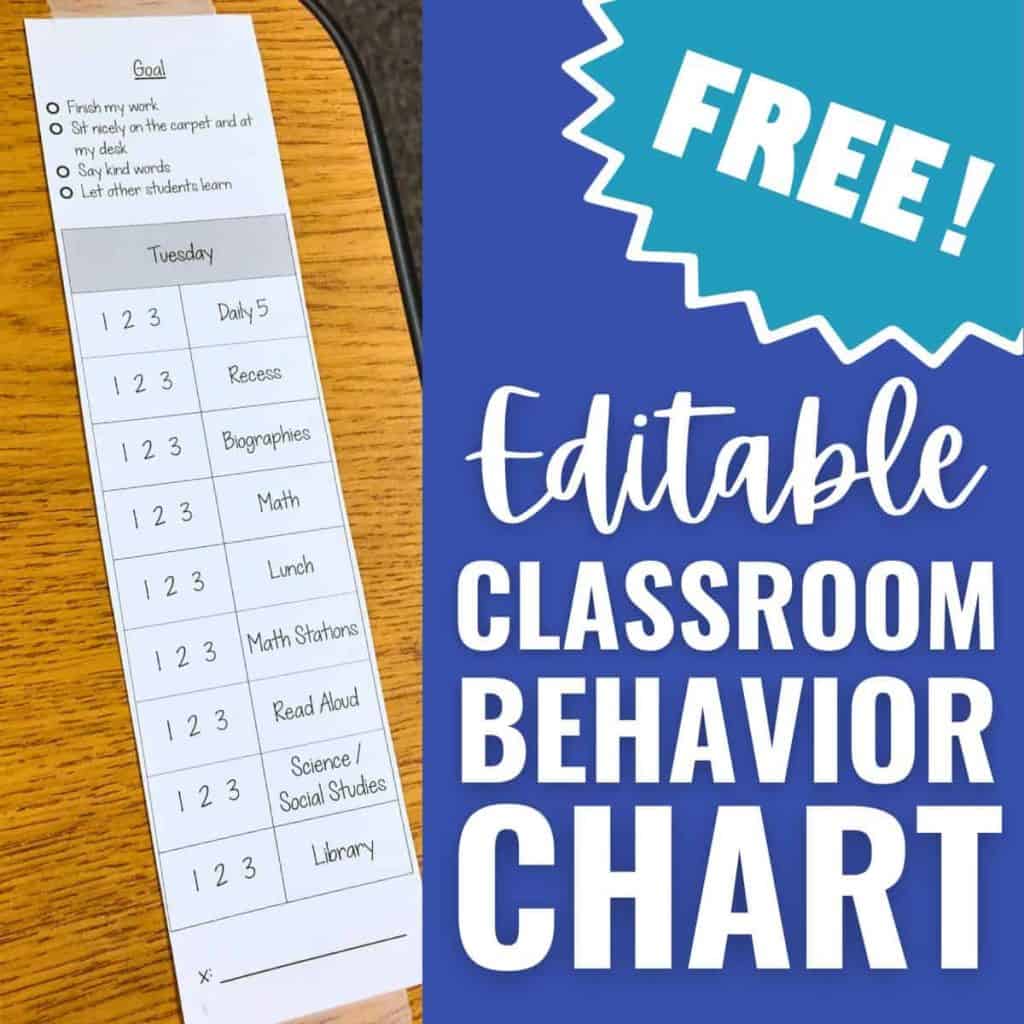
This post explains how I use behavior charts in my classroom. It helps in managing student behavior.
Are there other classroom procedures on your list that I didn’t mention above? I’d love to hear about them in the comments below.
Building a well-managed classroom is about being clear. When students know exactly what to do and how to do it, they feel safe, and that safety is what makes real learning possible. The time you spend teaching these procedures in the first two weeks of school pays off every single day for the rest of the year.
Start with the 22 must-have procedures and identify the five or six that matter most in your specific classroom. Teach those first, practice them until they’re automatic, and add more as your students are ready. You don’t have to implement everything at once.
Want to Reduce Disruptions So You Can Actually Teach?
Check out this 100% FREE Micro Training
from my friend Linda over at Teach 4 the Heart.
Creating a calm classroom environment can be hard…and you probably didn’t learn everything you needed to about classroom management in college. (I know I didn’t!)
But there is hope and a way to make your teaching experience more fulfilling and less stressful.
Watch this quick 28-minute training to learn how you can minimize disruptions so you can actually teach your content (and get to do the projects & activities that make learning more fun for EVERYONE!
Linda WON’T just tell you to “build relationships” because, frankly, even the best connections can’t eliminate all classroom challenges. Achieving a smooth-running class requires a more nuanced approach.

So join me for this FREE 28-minute training and discover their Calm Classroom Blueprint, used by thousands of teachers to:
- Significantly reduce disruptions during lessons & work times.
- Gain confidence In handling challenging situations (that previously left them dumbfounded).
- Lower daily stress levels and find joy in teaching again!

Thanks so much for posting this! It was so helpful.
I just loved your post and website, congratulations from Spain!!!